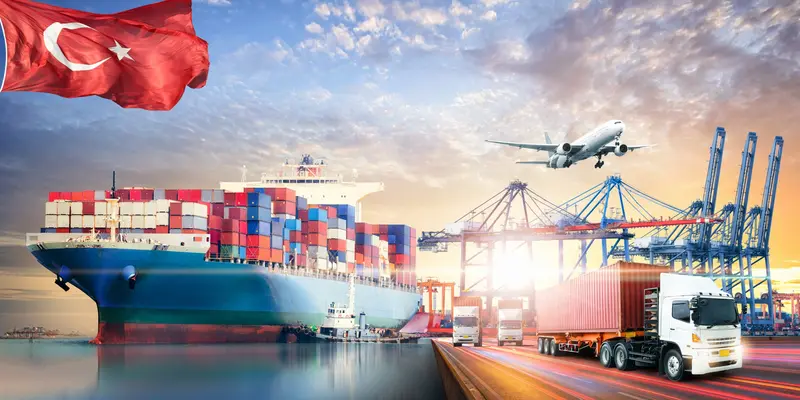


In a significant move aimed at strengthening Türkiye’s global trade position, the government has introduced an extensive Buyer’s Credit Support Program designed to enhance exporters’ access to financing and improve competitiveness in international markets. The Presidential Decree amending the “Export Supports Regulation” was published in the Official Gazette, marking the immediate launch of the initiative.
The new framework—implemented through Türk Eximbank—expands the scope of buyer’s credits offered to foreign purchasers of Turkish goods and services. Until now, Türkiye’s buyer’s credit mechanisms were primarily focused on medium and long-term financing structures. Under the revised model, the government now extends support to short-term buyer’s credits, including letter of credit–based transactions, with more competitive interest rates.
The Ministry of Trade emphasized that buyer’s credits offer a major strategic advantage for exporters: they help Turkish suppliers enter new markets at lower financing costs, reduce perceived risk in countries with limited capital access, and strengthen commercial trust by enabling buyers to secure funding directly. For markets where financial risk is a barrier, the mechanism can be decisive in closing deals that would otherwise be unattainable.
Risk-Sharing Mechanism Introduced
One of the most notable aspects of the new program is the risk-sharing model between the government and Türk Eximbank. In cases where buyer’s credits are not repaid, 25% of the outstanding risk—up to 1 billion TRY annually—will be covered by the state. This is expected to strengthen Eximbank’s ability to offer competitive packages in high-risk markets without overburdening its balance sheet.
Officials argue that this model will enhance the bank’s capacity to provide financing that directly supports Türkiye’s industrial production. However, economic analysts note that public risk-sharing also requires disciplined implementation, as it may expose government resources to non-performing debts in politically volatile regions.
Support for Overseas Contracting Projects
In addition to supporting traditional exports, the program includes dedicated financing benefits for investment goods exported within Turkish international contracting projects—a crucial sector in which Turkish companies hold significant influence, especially in Central Asia, Africa, and the Middle East. These buyers will now gain access to interest-supported loans, improving the competitiveness of Turkish engineering firms in large-scale infrastructure tenders.
The Ministry also highlighted that the improved buyer’s credit conditions will help Turkish companies establish more stable long-term relations with overseas partners by providing reliable and accessible financing tools—an increasingly important factor in emerging markets.
Expanded Support for Export Consortia
The decree introduces another major change: enhanced assistance for export consortia—business groups formed by at least three companies with the goal of entering foreign markets collaboratively. These consortia will now receive support for:
- Overseas unit leasing
- Architectural concept and setup expenses
- Warehousing and storage services
The goal is to enable SMEs to benefit from economies of scale, reduce market entry costs, and increase visibility in competitive global environments.
Notably, each consortium will be eligible for five years of support in each target market, allowing them to establish a sustainable presence instead of short-term promotional attempts.
Aims and Expected Outcomes
The government states that the comprehensive package is intended to achieve several long-term objectives:
- Expand Turkish exports into riskier and underserved markets
- Increase the competitiveness of Turkish firms by lowering financing costs
- Support value-added production and diversify export destinations
- Strengthen commercial ties through secured and predictable financing solutions
While exporters have welcomed the initiative, some industry experts argue that financing alone cannot resolve broader issues—such as logistics costs, long customs procedures in some regions, and the need for improved post-sale service networks. Still, most agree that the buyer’s credit program provides a crucial financial tool long demanded by exporters.
A Step Forward, but Not a Complete Solution
The newly launched support program represents one of the most ambitious financing expansions in Türkiye’s export policy in recent years. By blending state-backed risk-sharing with Eximbank’s loan infrastructure, the initiative aims to position Turkish exporters more competitively, especially in regions where financial access is a major barrier.
However, whether the program will achieve its full potential depends on market execution, risk management discipline, and exporters’ ability to strategically leverage the new financing tools. For now, the business community views the decision as a strong forward step, albeit one that must be paired with broader structural improvements to ensure lasting global competitiveness.