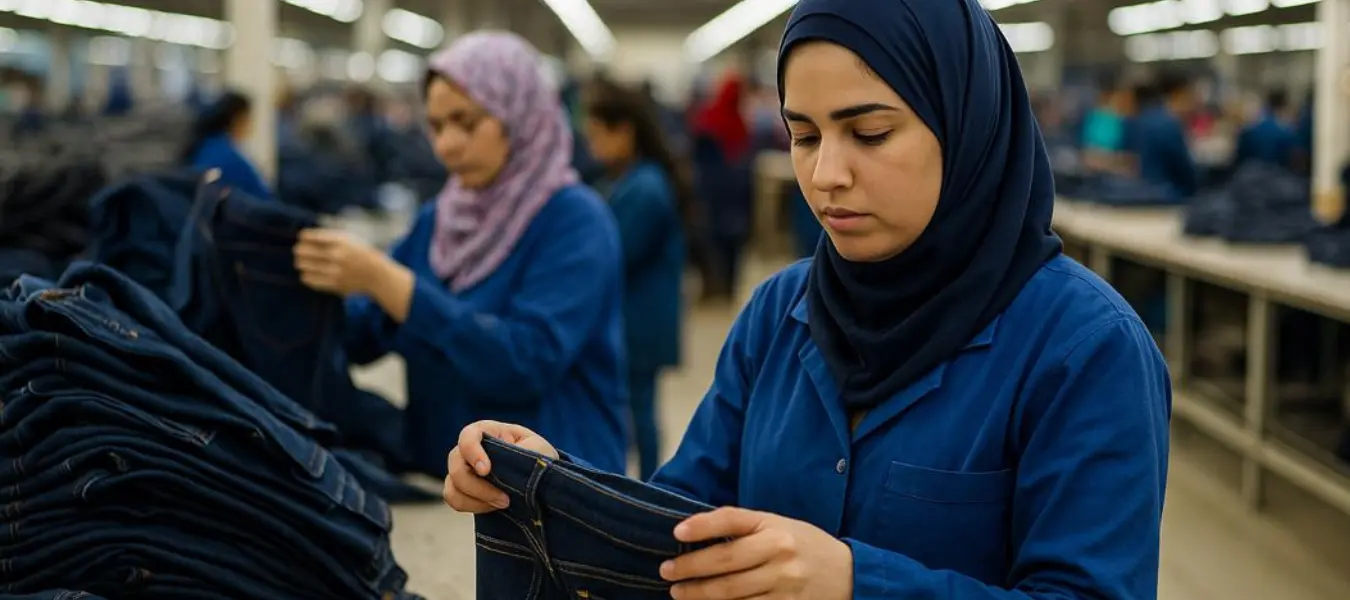


Egypt’s ready-made garment and textiles industry could boost its exports nearly sevenfold by 2030, according to Mahmoud Ghazal, Chairperson of Nile Textile Industries and a member of the Textile Industries Chamber. He says the sector can reach a $20 billion export target if Egypt stays aligned with its Vision 2030 strategy, which aims to build a more competitive and export-driven economy.
Ghazal points to the size of the global market to justify his optimism. The United States, European Union and Gulf countries import about $400 billion worth of apparel and textile products each year. Securing even 5 percent of that demand would be enough for Egypt to meet its long-term export goal. He adds that current shifts in global supply chains, driven by geopolitical tensions and the push for diversified sourcing, create a timely opening for Egypt to attract new buyers.
Still, the current numbers show how far the country needs to go. In 2024, Egypt recorded:
- $2.9 billion in ready-made garment exports
- $254 million in home textiles
- $230 million in woven and knitted fabrics
Ghazal says the gap is not for lack of demand but because of structural obstacles at home. Slow customs procedures, heavy documentation requirements, a rigid investment climate and limited capacity among some public-sector staff continue to hold exporters back.
To unlock growth, he calls for targeted reforms focused on industry modernisation and better integration of small manufacturers. His proposals include creating export cooperatives to help micro and small factories meet international standards, setting up support centres for technical and administrative training, and promoting vertical integration so that spinning, weaving, dyeing and garment production operate more efficiently within Egypt. Reducing dependence on imported raw materials, he says, is essential for improving competitiveness.
Ghazal also outlines two tracks for driving export expansion. The first is OEM and B2B production, which he sees as the quickest route for increasing volumes. The second is building Egyptian brands, a longer-term effort that requires investments in design, marketing and brand development.
He argues that the $20 billion apparel export target is within reach if reforms move quickly and the private sector plays a central role. Clearing customs and administrative hurdles, he says, would speed up progress and support Egypt’s wider objective of reaching $150 billion in total annual exports.
With international buyers increasingly looking beyond Asia for sourcing options, Ghazal believes Egypt has a valuable chance to strengthen its position—but warns that it must act fast to turn potential into real competitiveness.