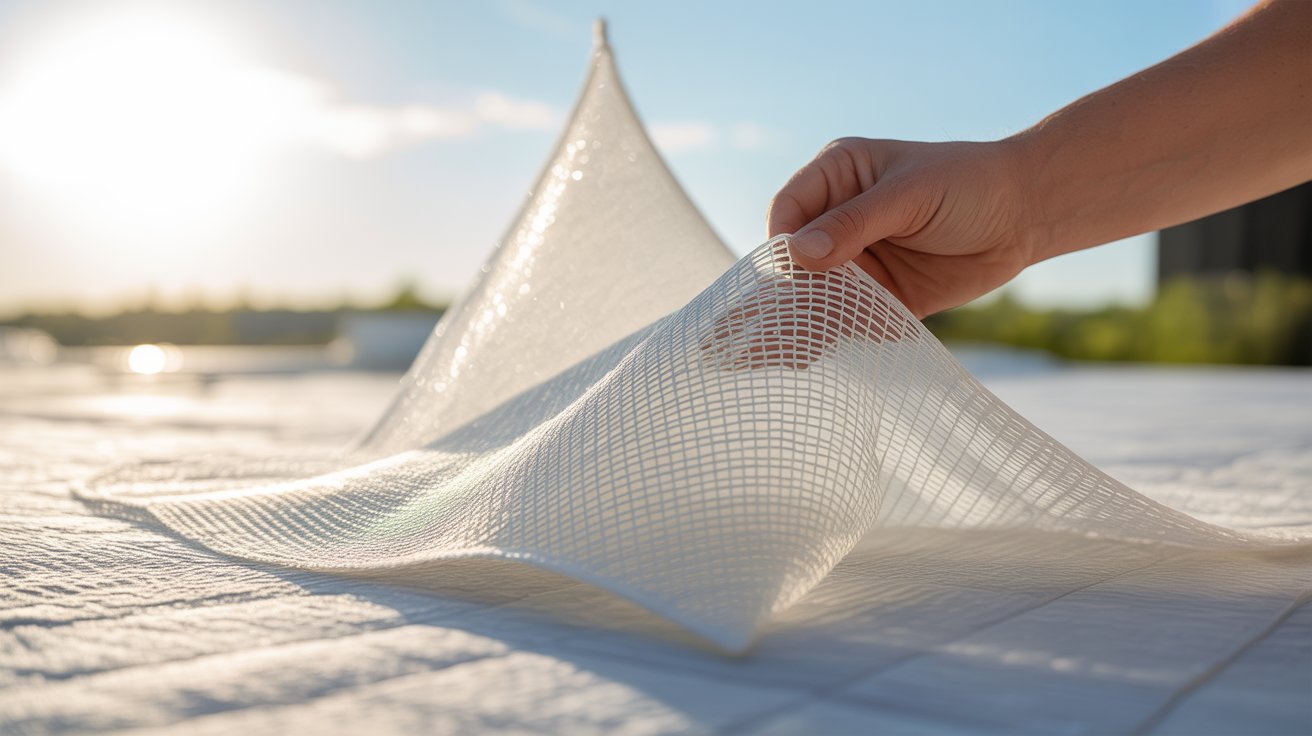


A materials breakthrough from the University of South Australia (UniSA) and Zhengzhou University is pointing toward a cooler and more sustainable future for people exposed to rising temperatures. The research team, led by UniSA Professor Jun Ma, has developed a lightweight textile that reflects almost all incoming sunlight while helping the body release heat naturally.
Outdoor field tests show the fabric can lower skin temperature by 2 degrees Celsius in direct sunlight and by nearly 4 degrees Celsius at night. For people working in construction, mining, agriculture or emergency response, this reduction could improve both comfort and safety.
Traditional cotton fabrics often trap heat and sweat. The new textile works differently. It is made from a biodegradable blend of polylactic acid (PLA) and boron nitride nanosheets (BNNS), producing a white, nanostructured material that can reflect 96 percent of solar radiation. At the same time, it allows heat and moisture to escape more easily. According to the researchers, it is about five times more breathable than cotton.
Professor Ma, who is part of UniSA’s Future Industries Institute, says the project is a direct response to the growing risks associated with extreme heat. He notes that longer and more intense heatwaves are affecting outdoor workers and communities globally, particularly where air conditioning is limited. The goal was to design a fabric that could cool the body passively by using natural physical principles rather than consuming energy.
To make the material, the team used a scalable electrospinning process. Boron nitride nanosheets were embedded into a PLA fibre network, creating a fabric that is light, strong and environmentally responsible. BNNS particles are known for their thermal conductivity, which helps move heat away from the skin. PLA, meanwhile, is derived from renewable resources and can biodegrade under industrial composting conditions.
Associate Professor Yamin Pan of Zhengzhou University, the study’s lead author, highlighted the role of UniSA in testing the cooling performance of the textile. The collaboration made it possible to evaluate how well the material handled heat transfer and radiative cooling under real-world conditions. Pan emphasized that international partnerships like this can speed up the development of advanced functional materials.
The study indicates that the textile could have broad applications. Potential uses include sportswear, industrial uniforms, military gear, and emergency responder clothing. With global temperatures continuing to rise, fabrics that reduce heat stress may become essential in many industries.
Professor Ma says the team is already looking at commercial pathways. The fabrication method is cost effective and suitable for mass production, making it a realistic option for manufacturers. The researchers believe the material could help shape the next generation of cooling clothing that is both high performing and environmentally responsible.
The project marks a promising step toward wearable solutions that tackle extreme heat through smart design rather than energy consumption. As heatwaves become more common, innovations like this biodegradable cooling textile could make a meaningful difference in everyday comfort and occupational safety.