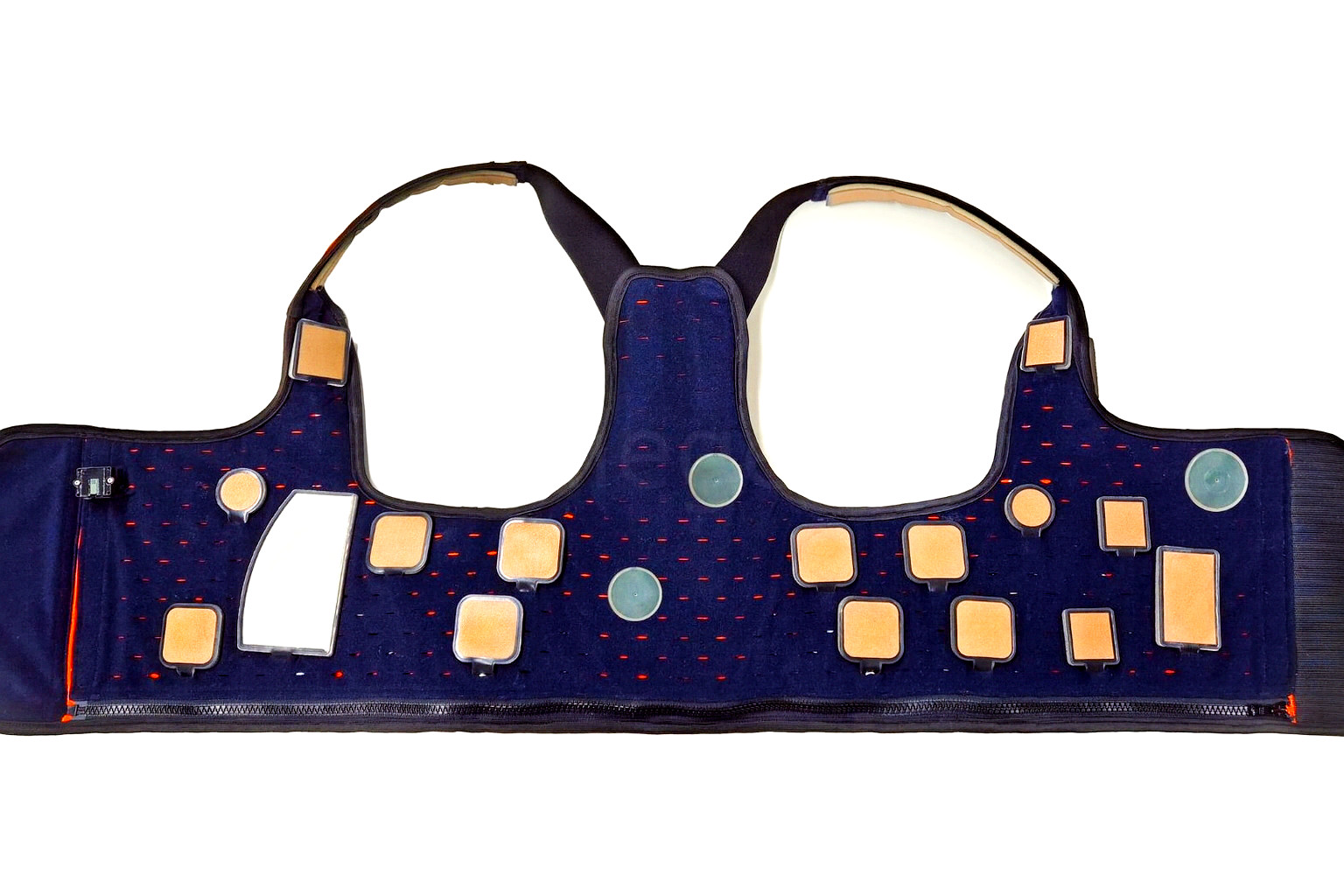


A new textile-based medical device is stepping into the spotlight with the promise of spotting heart problems long before patients reach a clinic. The smart vest, developed by Fraunhofer IZM in partnership with Charité and the Technical University of Berlin, will be showcased at Compamed 2025 in Düsseldorf this November. It blends wearable comfort with advanced sensors and AI to track the heart in ways that were once only possible inside a hospital.
Cardiovascular disease remains one of the world’s leading causes of death. Early detection can make a huge difference, yet long queues, long travel times and limited access to specialists often slow down diagnosis. For many patients, monitoring the heart means repeated hospital visits and long tests. The team behind this vest wants to simplify that process.
The vest is designed to be worn like regular clothing. It can be washed, reused and slipped on without effort. Inside the fabric sits a dense network of multichannel textile electrodes that pick up more than 110 cardiovascular parameters, with up to a thousand readings per second. According to the researchers, no other wearable captures such a wide range of data continuously and in real time.
An AI-supported platform processes these signals through a mobile edge computing unit embedded in the vest. This device filters and analyzes the data on the spot, then sends it wirelessly for medical review. A built-in chatbot also checks in with the wearer, prompting them to report symptoms or discomfort. The system blends the patient’s input, sensor readings and a doctor’s evaluation to generate a diagnosis and an updated risk assessment.
The goal is to give clinicians early warning signals and to give patients clearer insight into their heart health. It could also help people in rural areas or those with mobility challenges by strengthening access to telemedicine services.
Comfort has been a major design focus. The electrodes are semidry and biocompatible, avoiding the skin irritation common with gel-based sensors. Their modular layout keeps them in the right position regardless of body shape, ensuring a stable signal throughout the day.
Looking ahead, the researchers aim to shrink the technology even further. They plan to integrate the system into thin polyurethane patches that can stick to the body like a lightweight second skin. This could allow continuous monitoring with almost no disruption to daily life.
If successful, this vest may mark a shift in how cardiovascular diagnostics are delivered, moving essential monitoring from the clinic to the clothes patients already wear.